Tuesday, December 8, 2009

The End of the Line...

 We had a chance to watch a few interesting films this past week in many different genres.


"Tiny Katerina"  was another Cinema Verite where life is filmed purely from voyeur standpoint without any script or acting.  Katerina lived with her family in Siberia and the film showed how they lived on a day to day basis in both summer and winter climates.  It was honestly kind of odd to see Siberia without any snow on the ground as was depicted in the early moments of the film, but it quickly grew colder and as thing progressed.  Katerina and her brother were very adult-like in their actions...obviously in that kind of environment, everyone has to pitch in as soon and as much as they can.  The oil rigs that sprout up at the end were ominous to say the least.  Sad to see that both wildlife and human habitats are affected by that sort of thing.

Chel White's "Choreography of a Copy Machine" was shot in a very modern looking way.  I feel like not every image in the film was a shot strictly from a copy machine, but I definitely still thought it was a very innovative idea.


Chris Landreth's "Ryan" was pretty much the culmination of our entire class as it was a mash up of many of the genres we've learned.  Documentary, Animation, and even Avant Garde in the sense that this was a pretty unusual film.  The animation was incredible.  The imagination needed to manufacture the look of those characters is pretty amazing.  It was a sad story, but one that is better told than left unsaid.


"Let The Kitties In, Give Them Luncheon."


Grey Gardens was a very well done documentary because of its very refreshing and honest nature.  Big and Little Edie were great in that they were completely genuine humans who marched to their own drum.  I'm sure there are people who liked to watch this film because they're "weird" or "crazy" but I think it's actually kind of beautiful that there are people like this in such a cookie cutter world.

You could sense that Little Edie gave up on her life a bit by allowing herself to be tied down with her mother, but It also kind of seemed she belong there as well.  They were both peas in a pod.  To see two women brought up in such an aristocratic way, lose their priviledge, and still carry on like nothing changed was pretty interesting.  I wonder if they would have acted the same way if they were both from the poor part of town?

It's a great story how a Jackie O documentary spawned the chance meeting of the filmmakers Albert and David Maysles and the Beales.  The use of cinema verite that was the basis of this production provides about as close of a glimpse of truth that can be derived from film.


There have been adaptions for both stage and screen thanks to the fascination of the Beales to "normal" society. Cinema Verite Such as the film "Don't Look Back" starring Bob Dylan are a fantastic glimpse into life outside of most people's cereal box worlds.

Tuesday, November 17, 2009

Animation's Creations


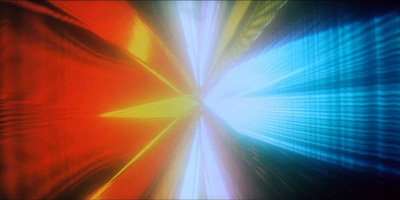
The work of the Whitney crew were pretty cool to watch since it was the beginning of computer aided images in film.  The 2001: A.S.O. art was something I wasn't expecting to see, but it was definitely kind of groundbreaking for this class to see something used in actual widespread theatrical cinema.

IBM choosing to offer residency to John Whitney was quite the feather in his cap as he was the first to actually receive acceptance to do so regarding animation.  He's got to be in the argument regarding the father of computer animation.

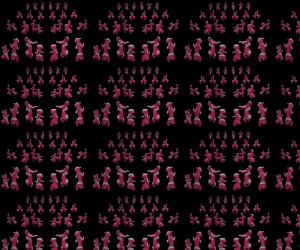
Whitney's film, Permutation (1966) was a beautiful collage of digital artistry.  It actually kind of reminded me of the scene in Dumbo (1941) when our little elephant pal starting hallucinating pink elephants that morph from shape to shape mostly in shades of pink


Jordan Belson's films, that also used computer animation, were his way of expressing a meditative vibe.  He used melodic music that seemed to match the actions of the pixels on screen.  Allures (1961), Cosmos (1964), and Chakara (1967) were all very similar in motion and substance.  They all seemed spacey and cosmic...it must have taken forever to produce such images on those archaic computers.

A couple shots from his films:


Tuesday, November 10, 2009

Bruce Conner


The Kennedy assassination is easily one of the most earth shattering moments in American history.  The conspiracies, media explosion, and American uneasiness were all tremendous waves in this country's wake.  Bruce Conner found a way to portray it in a very artistic light in his film, "REPORT."  His collage style and additions of stock footage kind of give the film an eerie vibe, and that's exactly how everyone felt at the time I'm sure...Not exactly sure what's going on or what's going to happen next.  I'm guessing similar to the 9/11 attacks.

"Cosmic Ray" was nice to see because of the inclusion of the Ray Charles song.  Conner was always very much involved in modern music movements throughout his life.  He took pictures of many punk bands for Search and Destroy magazine which included early coverage of the experimental band DEVO.  "Breakaway" (1966) starring a young Toni Basil was a cool film as well that I found on youtube.  He shot Basil dancing around to a song called "Breakaway" and when the music ends, he shows everything he's just shot in reverse, including the song.

I think most in the class would agree that Conner's work is some of the most enjoyable we've seen thus far.  It's creative and it's decipherable...


Tuesday, November 3, 2009

First To Fight Left Coasters


Sidney Peterson's "The Cage" was a pretty sophisticated film in the sense that many camera angles and tricks were used.  The most striking effect was when the lead characters were running backwards, while the crowds of people in the shot were walking normally.  When the film was reversed, it was confusing at first to understand what was happening, but the actors really sold themselves there.  It was also refreshing to have an Avant Garde film with a little humor involved...thanks to an adventurist eyeball hauling ass everywhere.


We noticed as a class many different scenes and shots that could be related to previous films.  The moments I found the most compelling related to the eyeball and the naked woman.  When the man first loses the eyeball on the ground, you begin to see shots of a naked woman running on repeat.  Naked eyeball = naked woman.  When the eyeball finally is tossed back into the guy's face, the naked woman steps over a dress, and hiked it up.  It reminded me of Anger's "Waterworks" in which a woman in 17th century dress runs through a courtyard in alignment with water spurted from fountains.

What do the relationships mean?  I can't tell.  It may have just been something intriguing for the audience to examine.


Bruce Baillie's films had a lot less narrative but were pretty visually striking.  Very nature driven, of course.  Must have grown up around trains or something as they both played heavily into both films, especially, "Castro Street."  San Francisco/PNW stars as a character in most of his work it seems.  He kept his camera very close to the things he was filming...possibly just to show the intimate details.

"To Parsifal" had a man vs. nature vibe to it, but still extremely vague.  In the beginning of the film, it was seemingly peaceful as a boat moves through an inlet.  Then you see unidentified fisherman gutting their catch.  Of course we then see a train slicing through a forest, while two naked humans take notice.  As far as I can tell, it has got to have something to do with Man abusing nature.

Peterson and Baillie's films were pretty interesting, but I enjoyed "The Cage" more than Baillie's work, personally.  West Side til we die.

Tuesday, October 27, 2009

Kenneth Anger & Brakhage


Kenneth Anger was quite an artistic prodigy to have produced such a vivid film as "Fireworks" while being only 17.  The gay iconography he wanted to let loose was very bold and extremely courageous for its time of release.  Homosexuality and sado-masochism are surely topics not taken lightly by society in 1947, especially from someone so young.  He was apparently brought up on charges due to this film being considered obscene, but thankfully the courts came to its senses and he was released.

The film, Eaux d'artifice was interesting to me because of the relationship between a very elaborately dressed woman fitted in 18th century wardrobe and the mirror images bestowed from the flowing water.  Some fountains resembled her fan, and certain spouts could represent her huge, powdered wig.  The continuous flowing of both the water, and running of the woman also were obviously in common to me.


Stan Brakhage's films that we watched had me a bit confused.  He mentioned that he wasn't trying to be abstract in his message, yet Moth Light and Garden of Earthly Delights definitely seemed to have little to say.  Although very beautiful visually.

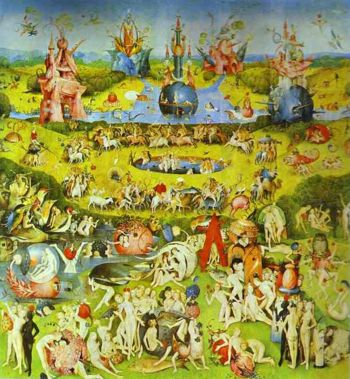
Here is a part of the original painting titled "Garden of Earthly Delights" by Hieronymus Bosch mentioned in class:


Brakhage used that name for one of his films in which he taped pieces of plants he found and arranged them in patterns.  Like I said, I don't know what kind of meaning he really has with that idea other than being abstract.  Possibly he just wanted to show beauty without any kind of pretense or label.

Tuesday, October 20, 2009

Maya is Deren Good


I thought Maya Deren's films were pretty groundbreaking.  Not only because of her unique camera angles, scripting, or acting...but mainly thanks to her just being a woman.  It must have been very difficult to gather enough respect to be able to portray her unconventional vision in a world where men called most of the shots.

"At Land" was my favorite film of the 3 we watched.  Maya was born from the waves, which was shot in reverse, and then proceeded to maneuver from scene to eclectic scene.  She climbed up rocks on the beach only to end up crawling through a forest...which then led to her interrupting a dinner party as she slunk over  dinner plates.

Deren seemed to have many different roles that interchanged with each other that may have each represented something in her personality.  One Maya kept picking up rocks and dropping them as her hands got full.  That may have been a message of never being satisfied.  Another Maya was spectating a chess game while beaming a smile and seemingly inciting joy in the players.  Could that have been to show the need for love and affection?  The most peculiar Maya was where she was running with the chess piece.  I assumed this role could describe the fears that everyone has deep down, and always running from.

It was a very vibrant film that really broke a lot of ground.  Both in message and gender.

Tuesday, October 13, 2009

Propaganda

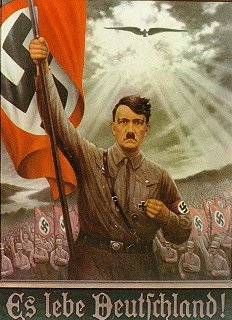
This week was a run of films that I'm sure everyone has heard about, but probably few have seen in their entirety.  Most people have seen the signs and maybe some clips of good old fashioned, enthusiastic Propaganda.  Of course Propaganda is an ugly word used mostly in political settings.

It usually brings to my mind Nazis...


Or Communists...

Mainly just because of the bold nature that governments use basically just tricks to woo followers.

Watching "Triumph of the Will"...I immediately could picture that film being used by Nazi's.  Hitler seeming godlike in the beginning, floating through the clouds.  White, Aryan boys frolicking around in Hitler Summer Camp.  Not a frown or minority person to be seen.  Pretty sad.  The footage itself was pretty well put together though, I must admit.  The mass crowds must have been a least a little difficult to handle.

What was more frightening to watch that day for me, however, was that our own wholesome U.S.of A. contributed it's own brand of movie theatre brainwashing called "Why We Fight."  It's just kind of eye opening that even the "good guys" still need to resort to these types of tactics for positive morale.  That is just the way it is.  But, like I said earlier, Propaganda seems like such a negative word.  I think we should just call our material "Positive Re-enforcement"


Tuesday, October 6, 2009

Documentaries


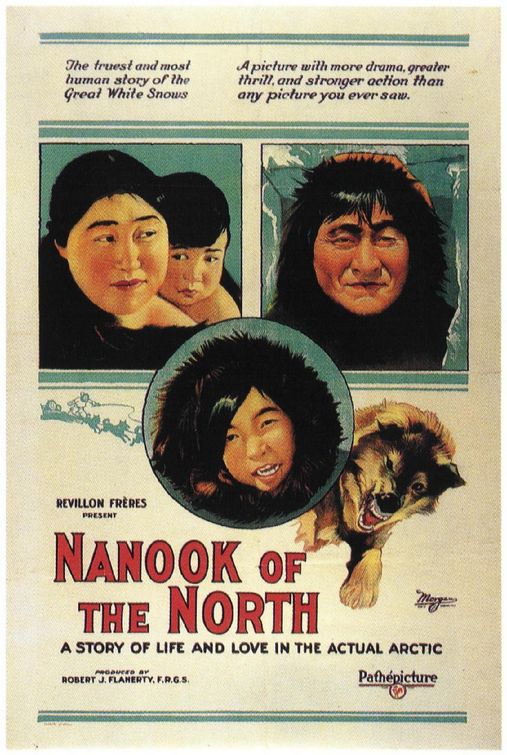
Being that "Nanook" is considered the first feature length documentary, it definitely has it's place in this course.  I found it interesting that this film was actually partially staged...meaning the director, Robert Flaherty set up shots on purpose instead of everything flying by the seat of its pants, so to speak.  Kind of crazy, but its seems like a precursor to what we know as reality tv these days, doesn't it?


Flav you got nothing on Nanook!

Regardless of shots being manufactured for film, it was still a very groundbreaking medium for Flaherty to pursue.

The man with a movie camera was a dialogue-less adventure with a man just walking around the Soviet Union with a camera filming random things.  The one aspect I found fascinating in this film was the shot at the Nazis.  One of the targets at the end of the movie was a person wearing a nazi cross hat.  Kind of intriguing considering both country's future in the history books together.

Wednesday, September 30, 2009

Surrealism


 Surrealism has been easily the most interesting genre of film our class has studied yet.  It includes some of the most nonsensical scenes that could ever make it on camera...but even in it's purposeful nonsense, potent thoughts can be aroused. 

"The Seashell and the Clergyman" was a very odd film by Germaine Dulac.  It seemed to include a man going through extreme sexual frustration while trying to chase down a girl.  She was protected by some sort of military man who then becomes a priest.  Eventually the sexually frustrated man attempts to kill the military man/priest by both strangling him and throwing him off a cliff. 

I believe it had something to do with wanting a woman who was already in a relationship that you could have no control over.  The woman constantly running from the pent up man stuck her tongue out at him in points of the film, and in one scene a pounding of fists on the table seemed almost masterbatory.

There were some new camera techniques that I haven't seen before in our films such as some cross fading used throw a street chase scene and the illusion of the priest's head splitting in two.

The most intriguing part of the "The Seashell and the Clergyman" was the combination of scenes where in the beginning of the films, the frustrated man fills glass beakers with a fluid, only to break them.  Then, the last scene of the movie has him lifting the plate he was using to fill the beakers to his own mouth.  Was he going to smash himself next?  Suicide resulting from his failure in securing his girl?  It's quite a bit to digest.


Un Chien Andelou by Dali and Bunuel was also cool but mostly just because of its strangeness.  I didn't pick up any message really....except for some visual connections  But man, that eye slice!


Tuesday, September 22, 2009

Abstract Before Breakfast.


The films that encompassed early animation that have been viewed in class are certainly still not carrying obvious messages. However, you can see the advances in technique as we continue to march onward through the genres in films beginnings.

Symphonie Diagonale looked like a neon light that would flash over a bar somewhere in outer space. Shapes constantly moving back and forth, blinking at you in constant motion. I enjoyed the look of this film more so than Rhythmus 21, which just included square shapes evolving into more square shapes.

Had to love Ghost's For Breakfast because it's finally a film that seemed to make any kind of sense in a broad scale, even though it still wasn't Everybody Loves Raymond. It had some nice camera uses such as sideways angles that went along well with the lighthearted scenes of the "ghosts" running around causing trouble. It still had a very artistic feel to it though and incorporated shapes and some of the first scenes of slow motion, both forward and reversed I can remember.


The times are changing.

Tuesday, September 15, 2009

First to Fight - Dada and the Avante Garde


The early Avant Garde films that we were exposed to in week 3 seemed to get mixed reviews in class and that's being generous. It appeared to me as though most of my classmates felt that the filmmakers in the Dada period weren't making much sense or lead to any kind of point with their work. I can understand that point of view as it's hard to digest watching something that doesn't really have a dead set story, as most of us are used to thanks to modern cinema.

The film that I could get a grip on the most of everything that was shown was easily Leger's "Ballet Mecanique." The film both showed clips of many different mechanical mechanisms such as pistons pumping to go along with shots of people smiling, frowning and walking up and down stairs.

I thought the film was trying to portray the relationship between the movements and functions of both anatomy and machine. Two instances specifically come to mind in developing the consistencies between both.

The first is a silver ball of some sort swinging back and forth in a repetitive motion. Soon after that footage was a woman smiling and frowning in the same back and forth fashion as the silver ball.

The next images that related to each other were shots of a piston pumping up and down. Then a woman was shown walking up a flight of stairs in repeat. If you think about the way a leg works, it follows the same pattern of a piston. up and down. They can certainly be related in form.

The Surrealists/Dadaists/Cubists definitely had some interesting perspectives on Art and Film, but it is certainly hard to get a read on what they are trying to say. But I guess that could be the point, right Marcel?

Tuesday, September 8, 2009

Early Animation and Billy Corgan's Head

This past week in class we were shown early forms of animation after a brief discussion regarding Edison and caricaturists. Edison, being more inventor than artist, didn't really pursue film outside of the basic development of the form. He may be considered a forefather of film, but didn't really try to expand its boundaries as Emile Cohl, one of the early caricaturists and the father of animated cartoons.

Watching Gertie the Dinosaur gave a few different thoughts. It was obviously dated and would be considered a dinosaur of a cartoon in more ways than one. While not very exciting to watch in modern times, It must have been riveting to first get a taste of the way drawings could be photographed and a dialogue could be developed with a human off camera.

Melies's "A Trip to the Moon" was easily the high point of the day for me. His sets were really impressive, especially because he painted and developed the sets himself. I definitely do recall the Smashing Pumpkins video that was inspired by this film. I was really happy to get a chance to see the film, after hearing about it before. I'm really looking forward to reading up on Melies work as our class progresses.

One last thing: Separated at birth?

Wednesday, September 2, 2009