Tuesday, November 17, 2009

Animation's Creations


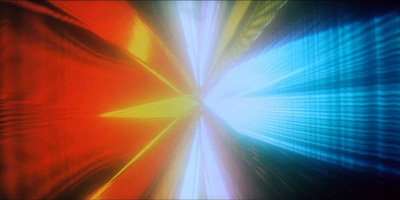
The work of the Whitney crew were pretty cool to watch since it was the beginning of computer aided images in film.  The 2001: A.S.O. art was something I wasn't expecting to see, but it was definitely kind of groundbreaking for this class to see something used in actual widespread theatrical cinema.

IBM choosing to offer residency to John Whitney was quite the feather in his cap as he was the first to actually receive acceptance to do so regarding animation.  He's got to be in the argument regarding the father of computer animation.

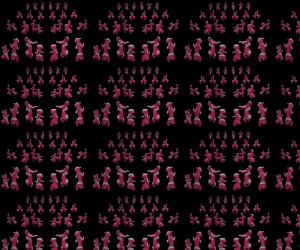
Whitney's film, Permutation (1966) was a beautiful collage of digital artistry.  It actually kind of reminded me of the scene in Dumbo (1941) when our little elephant pal starting hallucinating pink elephants that morph from shape to shape mostly in shades of pink

Jordan Belson's films, that also used computer animation, were his way of expressing a meditative vibe.  He used melodic music that seemed to match the actions of the pixels on screen.  Allures (1961), Cosmos (1964), and Chakara (1967) were all very similar in motion and substance.  They all seemed spacey and cosmic...it must have taken forever to produce such images on those archaic computers.

A couple shots from his films:


Tuesday, November 10, 2009

Bruce Conner


The Kennedy assassination is easily one of the most earth shattering moments in American history.  The conspiracies, media explosion, and American uneasiness were all tremendous waves in this country's wake.  Bruce Conner found a way to portray it in a very artistic light in his film, "REPORT."  His collage style and additions of stock footage kind of give the film an eerie vibe, and that's exactly how everyone felt at the time I'm sure...Not exactly sure what's going on or what's going to happen next.  I'm guessing similar to the 9/11 attacks.

"Cosmic Ray" was nice to see because of the inclusion of the Ray Charles song.  Conner was always very much involved in modern music movements throughout his life.  He took pictures of many punk bands for Search and Destroy magazine which included early coverage of the experimental band DEVO.  "Breakaway" (1966) starring a young Toni Basil was a cool film as well that I found on youtube.  He shot Basil dancing around to a song called "Breakaway" and when the music ends, he shows everything he's just shot in reverse, including the song.

I think most in the class would agree that Conner's work is some of the most enjoyable we've seen thus far.  It's creative and it's decipherable...


Tuesday, November 3, 2009

First To Fight Left Coasters


Sidney Peterson's "The Cage" was a pretty sophisticated film in the sense that many camera angles and tricks were used.  The most striking effect was when the lead characters were running backwards, while the crowds of people in the shot were walking normally.  When the film was reversed, it was confusing at first to understand what was happening, but the actors really sold themselves there.  It was also refreshing to have an Avant Garde film with a little humor involved...thanks to an adventurist eyeball hauling ass everywhere.


We noticed as a class many different scenes and shots that could be related to previous films.  The moments I found the most compelling related to the eyeball and the naked woman.  When the man first loses the eyeball on the ground, you begin to see shots of a naked woman running on repeat.  Naked eyeball = naked woman.  When the eyeball finally is tossed back into the guy's face, the naked woman steps over a dress, and hiked it up.  It reminded me of Anger's "Waterworks" in which a woman in 17th century dress runs through a courtyard in alignment with water spurted from fountains.

What do the relationships mean?  I can't tell.  It may have just been something intriguing for the audience to examine.


Bruce Baillie's films had a lot less narrative but were pretty visually striking.  Very nature driven, of course.  Must have grown up around trains or something as they both played heavily into both films, especially, "Castro Street."  San Francisco/PNW stars as a character in most of his work it seems.  He kept his camera very close to the things he was filming...possibly just to show the intimate details.

"To Parsifal" had a man vs. nature vibe to it, but still extremely vague.  In the beginning of the film, it was seemingly peaceful as a boat moves through an inlet.  Then you see unidentified fisherman gutting their catch.  Of course we then see a train slicing through a forest, while two naked humans take notice.  As far as I can tell, it has got to have something to do with Man abusing nature.

Peterson and Baillie's films were pretty interesting, but I enjoyed "The Cage" more than Baillie's work, personally.  West Side til we die.